- Home
- Housing
Housing
Application of Leca® LWA in buildings; Walls, slabs, floor fillings or draining around and under the structure.
Lightweight, Thermal and Sound insulation are the key comfort factors to use LECA® LWA in your housing project. Whenever building a new villa or renovating a hospital, both the owner and user are seaking comfort in utilizing and maintaining the building.
LECA® LWA can be applied in loose bulk or mixed with cement as lightweight concrete (Block Solution, Floor Base, Precast & Screed Solution). Applied as loose insulation fill or as blocks, lightweight is the key argument.
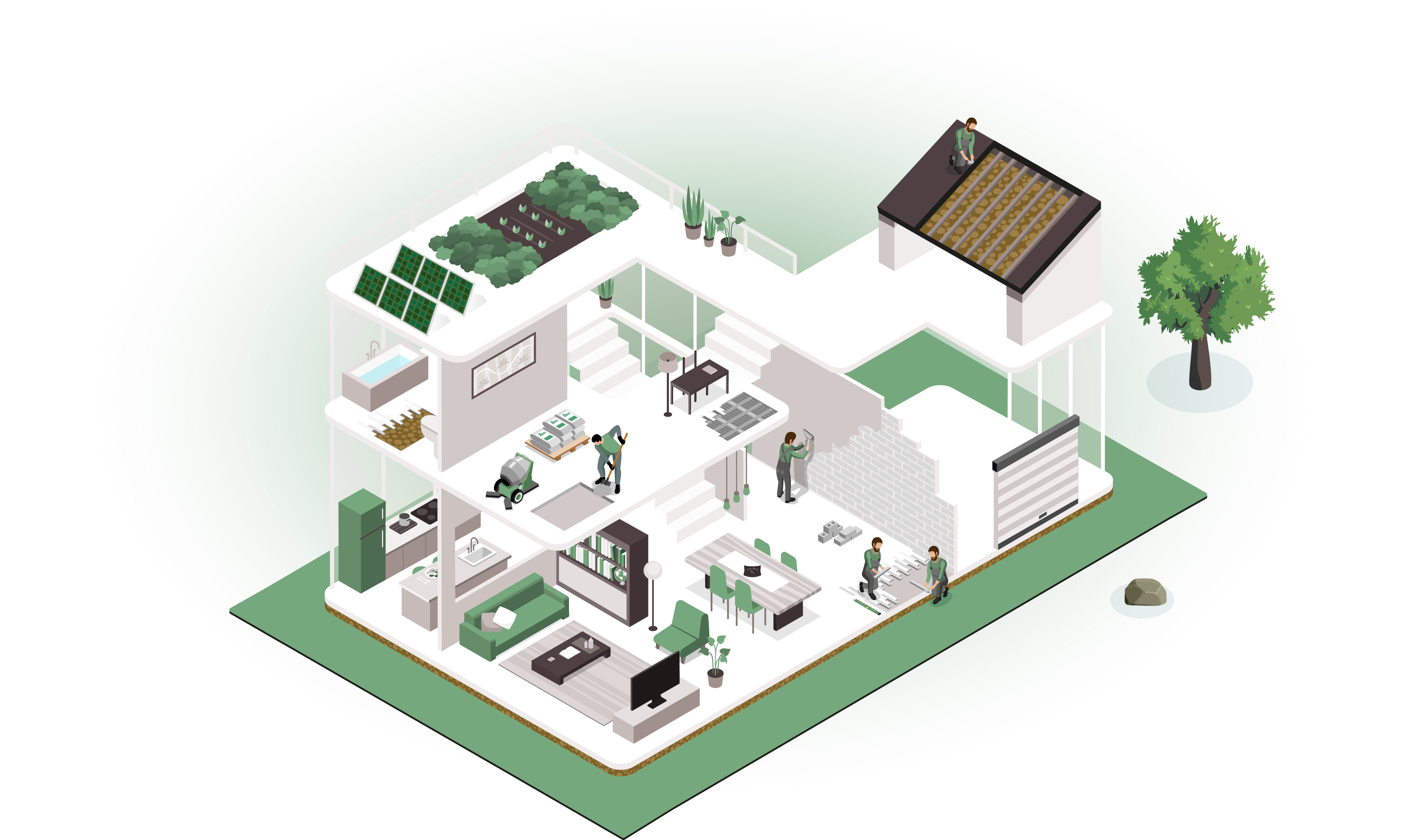
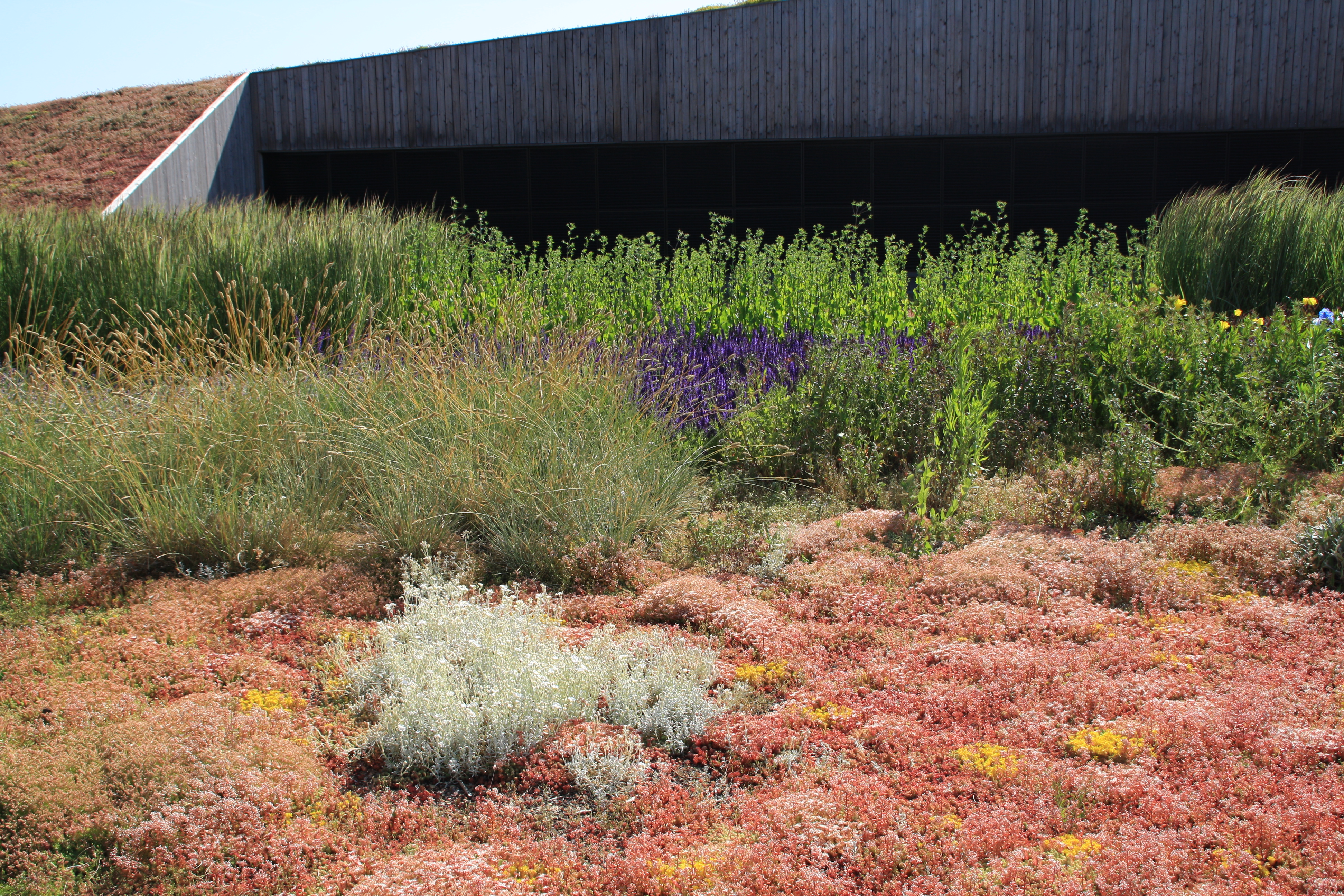
A green roof can improve the green area available, the habitat and biodiversity, the building physics and the water management.
There are two types of green roofs, extensive and intensive, differentiated mainly by the cost, depth of growing medium and the choice of plants.
Green roofs with Leca® LWA can help retaining, storing and even cleaning the water.
Which are the advantages of having a green roof?
- Reduction of the “urban heat island” effect
- Reduction of rainwater runoff flow
- Improves the quality of water sent to drainage systems
- Improves air quality in cities
- Increases the building's thermal insulation level
- Improves acoustic comfort
Case study: https://www.leca.se/referenser/taktradgard-emporia-malmo
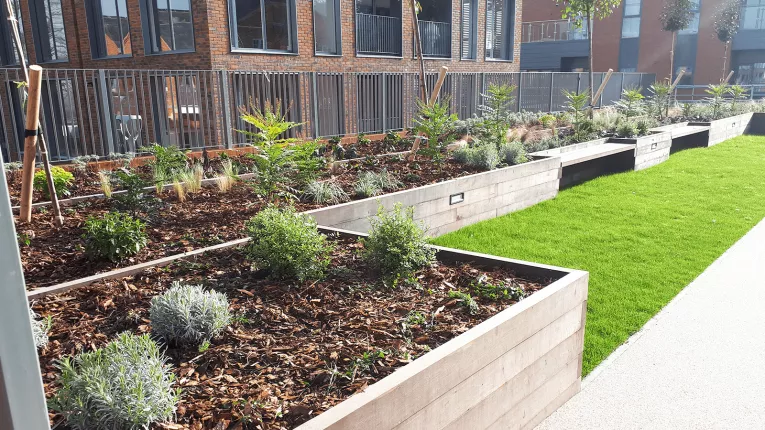
Leca® LWA plays a very important role in floriculture. When cultivating and caring for plants and flowers, it contributes to their healthy growth, ensuring the necessary oxygenation and protecting them from parasites and other harmful elements. Furthermore, it allows saving and managing the water supply for rational and balanced development.
Case study: https://www.leca.se/referenser/taktradgard-bjorvika-oslo
The service life target of building's structure is at aprox 25–50 years. The service life target also affects the design. When defining the structure of the upper base, the materials are selected, and the structural solutions and details of the roof are planned.
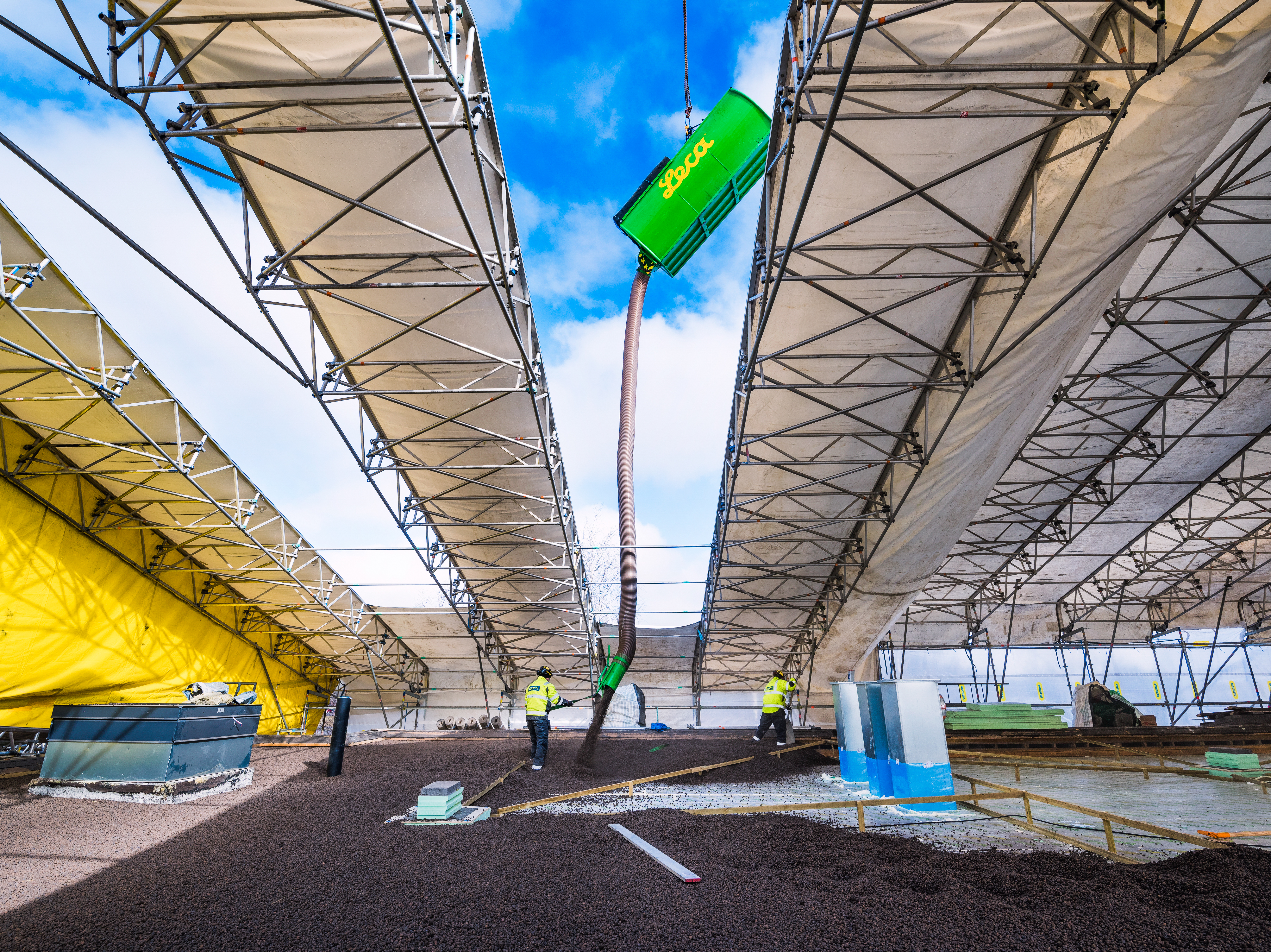
The thermal comfort of a house can be substantially improved if the roof, namely the mat slab or the attic, is thermally insulated. If the attic is accessible and in common use, insulation can be done using one of the floor filling techniques. If the attic is unused, it can be insulated with Leca® LWA bags.
After the building lifetime, Leca® LWA can be reused or recycled.
Case study: https://www.leca.fi/referenssit/varmatoiminen-kevytsorakatto-kruunuvuorenrannassa
Choosing the most appropriate solution must be subject to a careful reflection and proportional to the functional weight of walls - particularly exterior walls - in the overall construction performance.
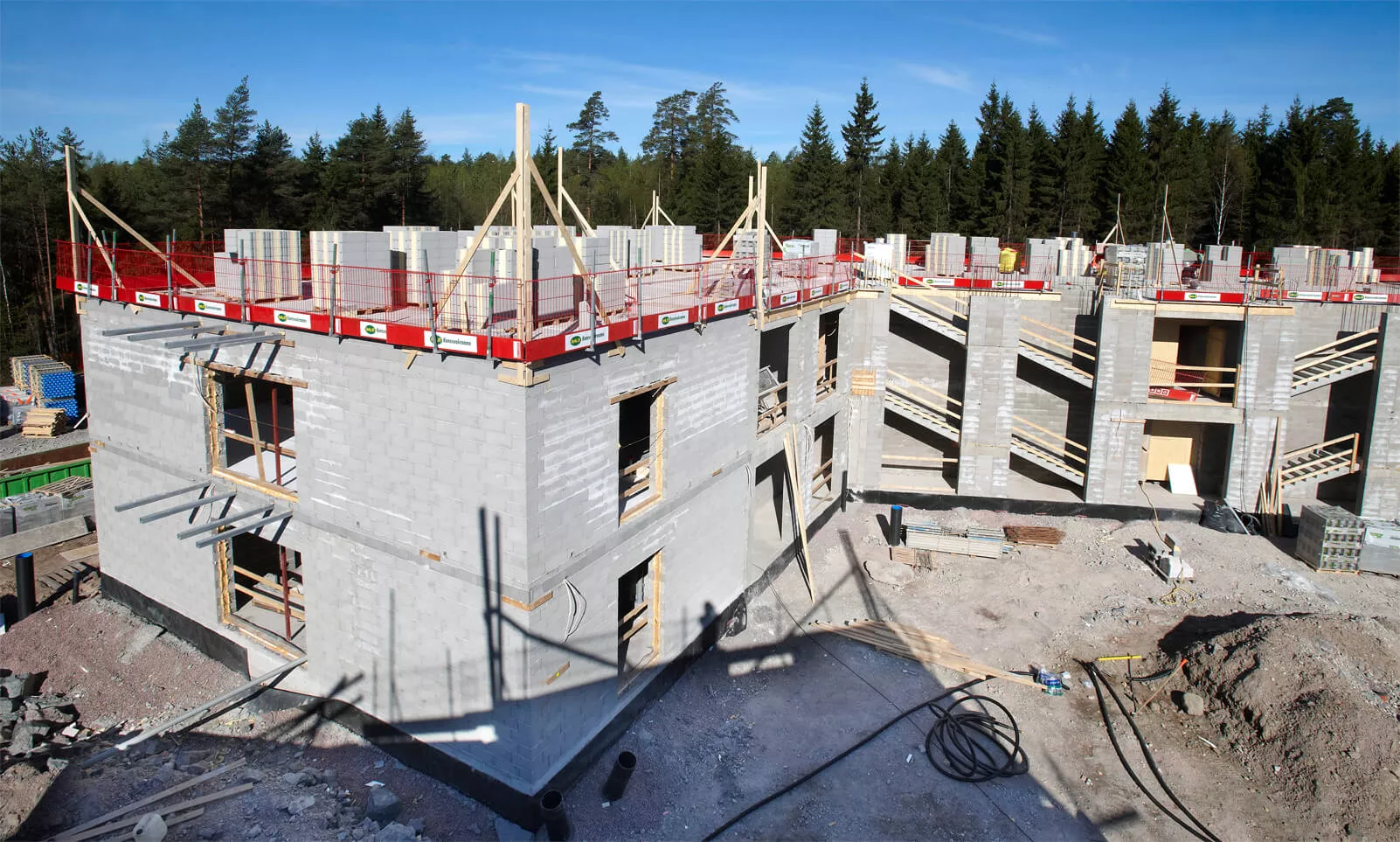
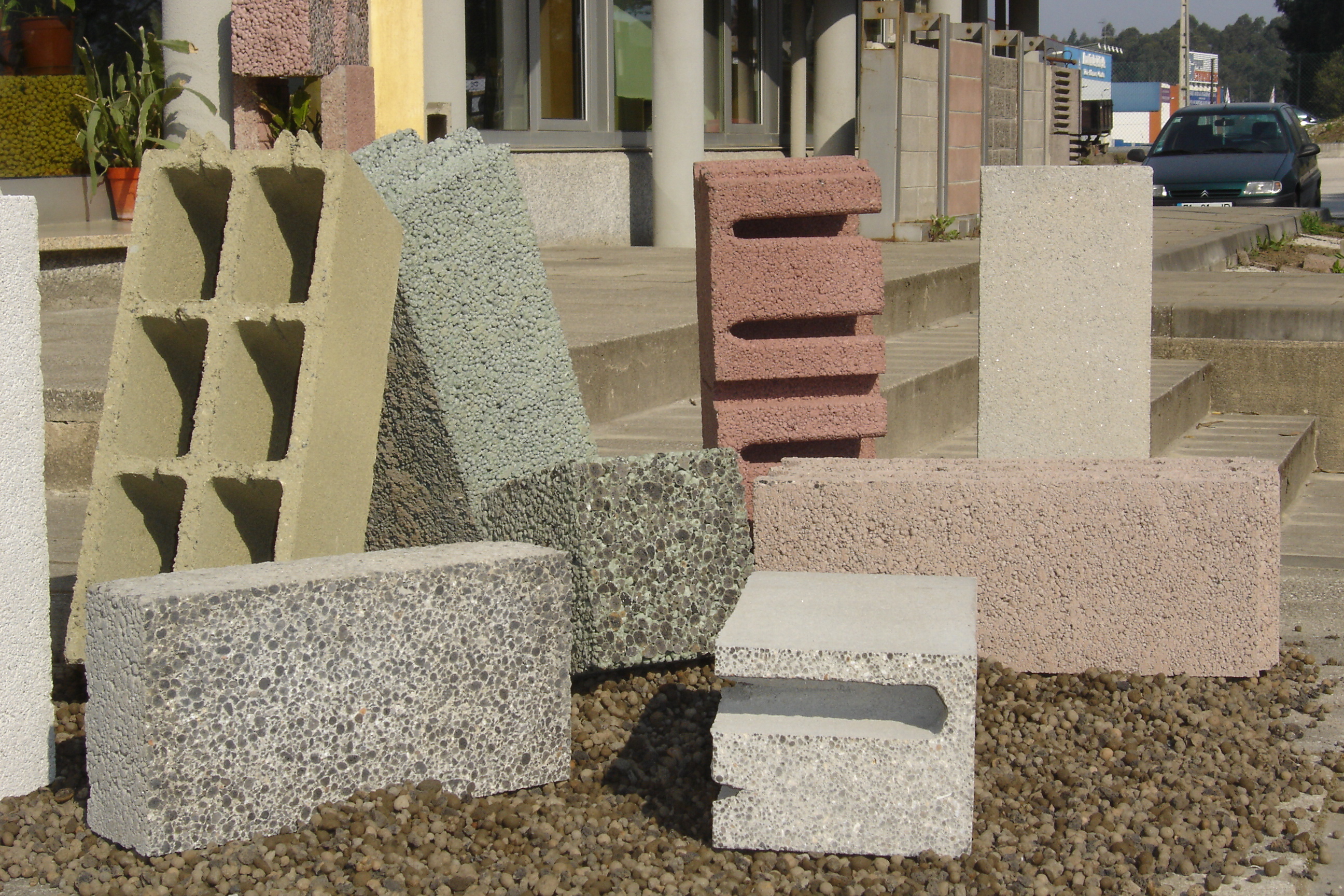
Leca® blocks have various types and different geometries depending on their application and the type of solution they are part of, have the following advantages:
- Lighter and therefore easier to install, leading to greater team productivity.
- Despite being light, Leca® Blocks are resistant and some of them even allow the construction of structural or resistant masonry.
- Leca® LWA, which is part of their composition, gives them a higher level of thermal insulation than normal concrete blocks or traditional ceramic bricks, the degree of thermal insulation depends on the type of block.
- The geometry of some of the Leca® Blocks allows them to obtain high acoustic insulation, allowing the construction of simple walls with a sound absorption coefficient (Rw) higher than other solutions.
Case study: https://www.leca.fi/referenssit/kustannustehokas-ratkaisu-asuntorakentamiseen
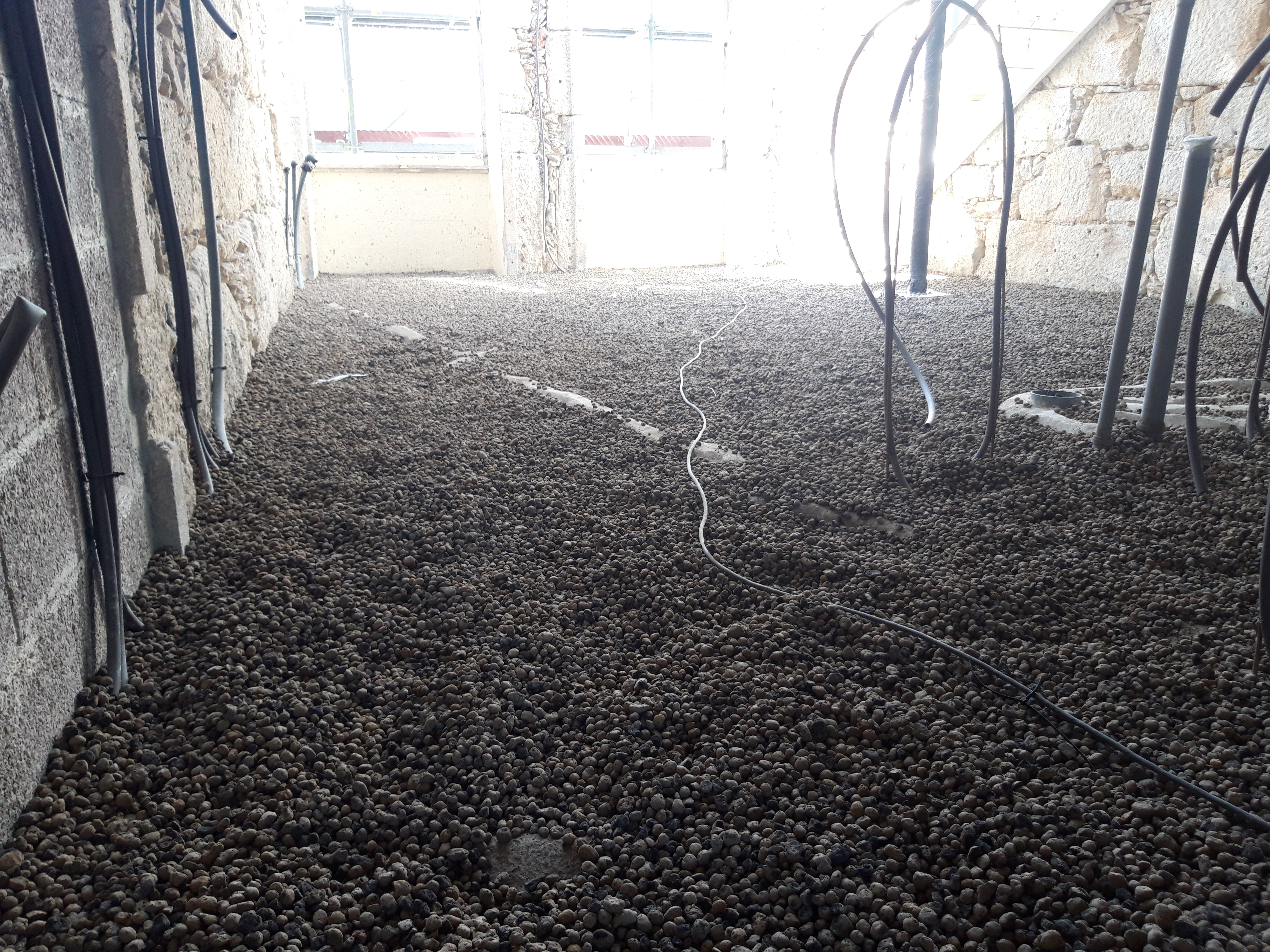
Lightweight, resistant, insulating and easy to install floor solutions if often required when rehabilitation of buildings.
Among them, we highlight dry solutions: they will turn your rehabilitation more sustainable since it is composed of a 100% natural product, which do not require the use of water and cement.
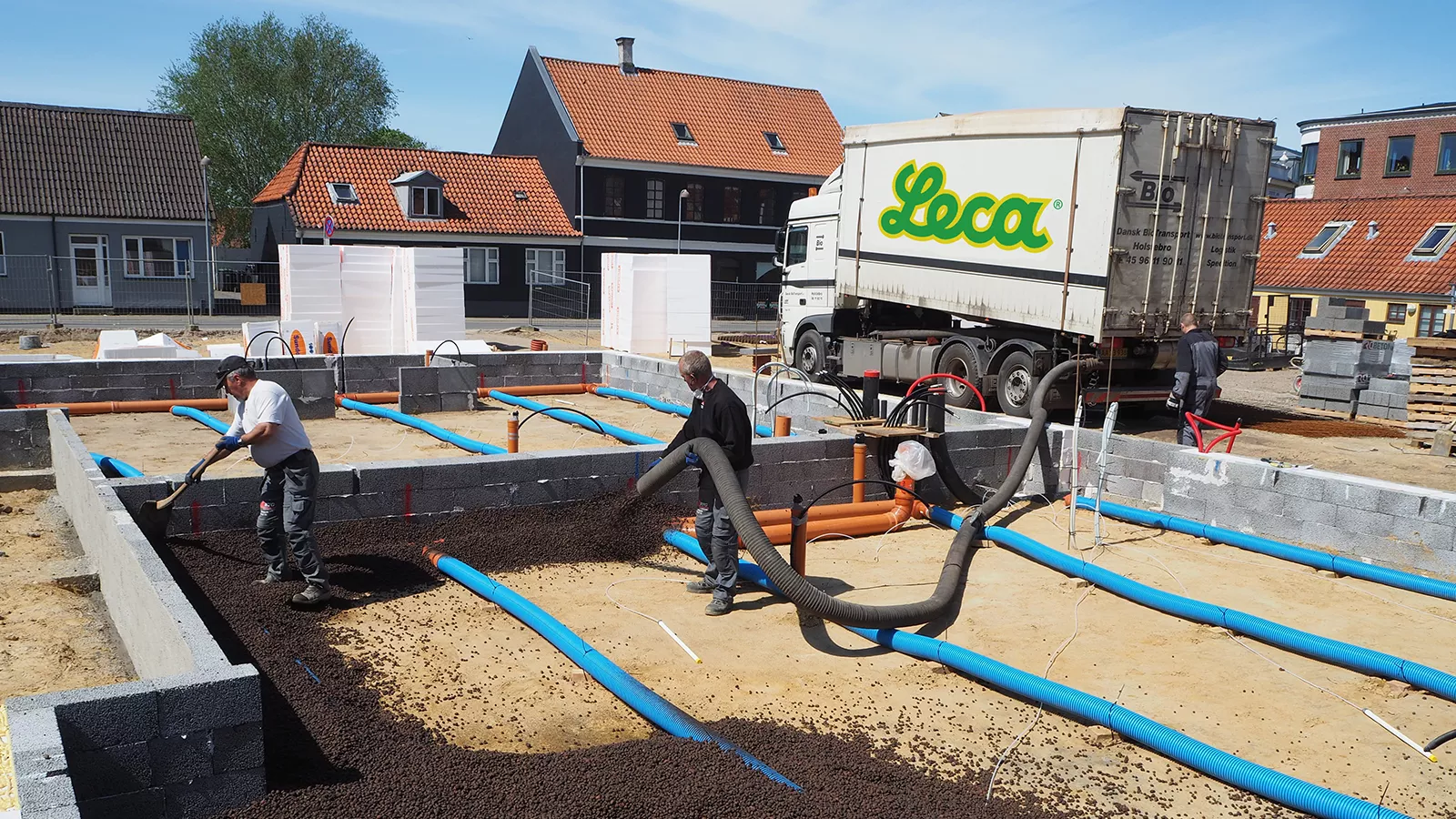
Using Leca® LWA the rehabilitation process more efficient and quicker since it is lightweight and easy to handle, is thermally insulating, is protective to duct, pipe and damp proof membranes, can be installed in the bag directly in to the foundation saving time and money and lay it in minutes in a simple, one-man operation.
Case study: https://www.leca.fi/referenssit/1950-luvun-kerrostalon-valipohjataytot-lecar-soralla
Usually, the ground floor is by definitiin a ventilated cavity which must not be closed off. If this is done with insulation materials or by covering the associated ventilation grates in the facade foundation, the probability that the relative humidity under the wooden floors will increase is very high, and this can provide good growth conditions for mold and fungal attack.
If you choose to do the insulation of ground floors of buildings with Leca® LWA the result will be markedly noticeable on both heat consumption and comfort in the home due to the material's properties, in special the thermal resistance and the drainage. Additional to that, the process will be quick and easier in comparison with traditional solutions.
Case study: https://www.leca.co.uk/case-studies/LIVERPOOL-UNDERFLOOR-RENOVATION
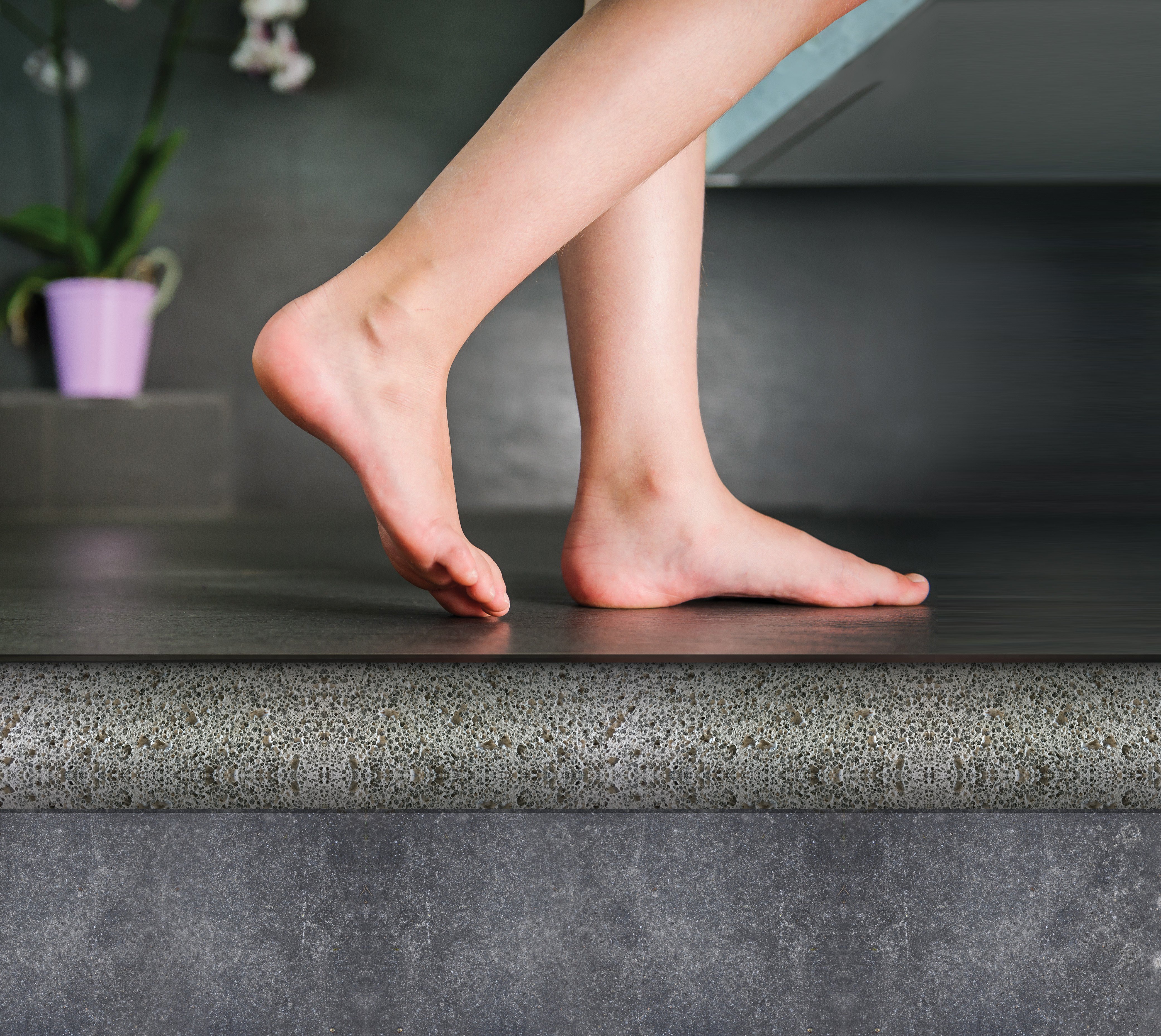
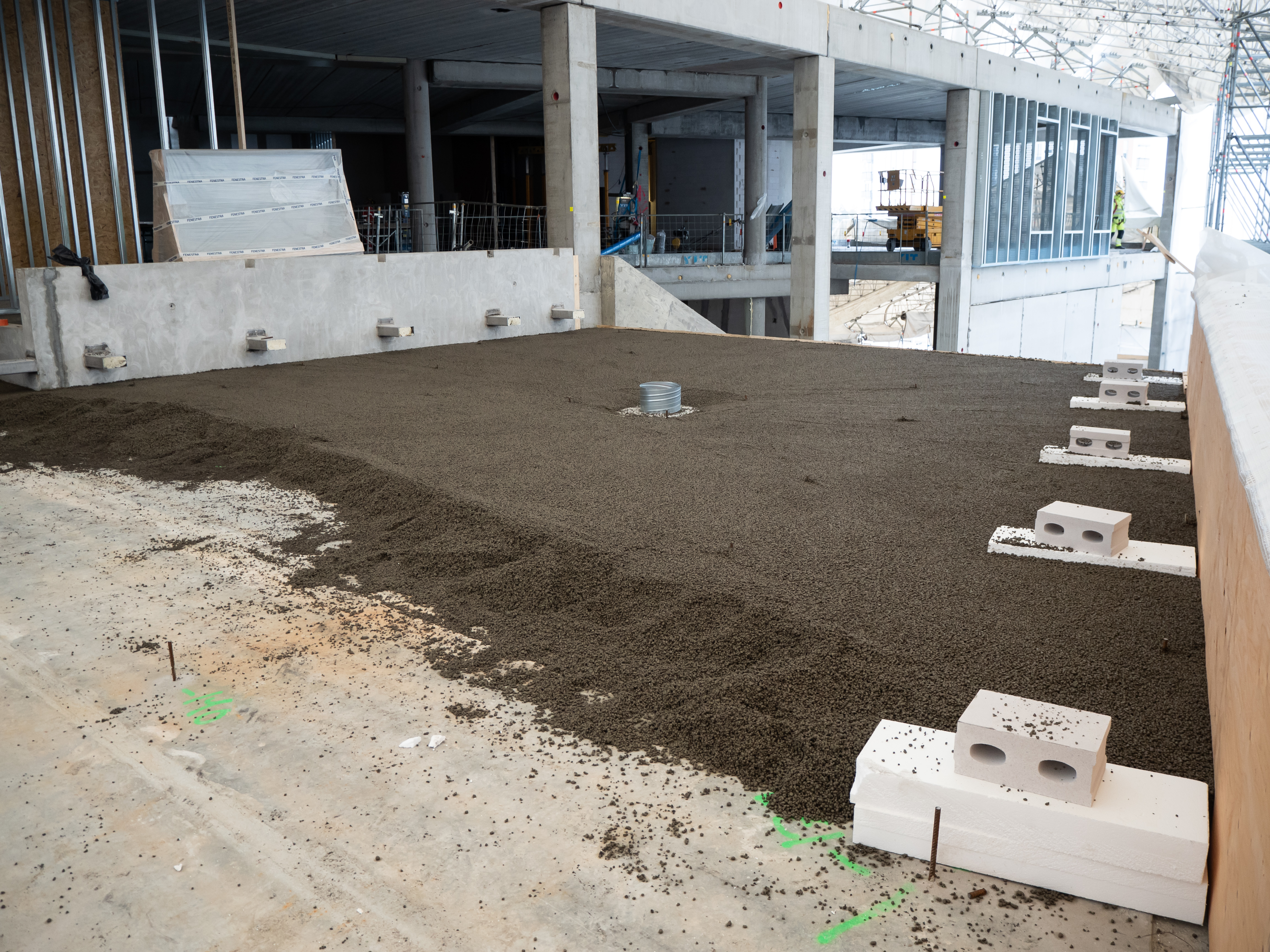
Pre-mixed Leca® lightweight concrete for filling and levelling interior and exterior floors, applied in a single layer, suitable for new construction and renovation.
Ideal due to its properties:
- Lightness: ideal lightweight solution for construction and renovation.
- Speed and simplicity: faster and simpler application.
- Smooth finish: smooth finish for direct application to ceramic tiles or floating floors.
In addition to pre-mixed solutions such as Leca® Uno and Leca® Mix, specific formulation of lightweight concrete is also possible with Leca® LWA.
More information here: https://www.leca.pt/solucoes/edificios/pavimentos/enchimentos-de-pisos
LECA has a set of light, resistant and insulating solutions for filling floors. Among them, we highlight dry solutions: they will turn your rehabilitation more sustainable since it is composed of a 100% natural product, which do not require the use of water and cement.
Using Leca® LWA the process is more efficient and quicker since it is lightweight and easy to handle, is thermally insulating, is protective to duct, pipe and damp-proof membranes, can be installed in the bag directly into the foundation saving time and money and lay it in minutes in a simple, one-man operation.
Case study: https://www.leca.pt/obras-de-referencia/solucoes-secas-na-reabilitacao-urbana-sustentavel
To meet the requirements between the functional weight of the building elements - walls, floors, etc - with their performance it is necessary to look for all the elements characteristics in detail.
The most relevant requirements to consider in referred to analysis are: mechanical stability; fire safety; rain tightness; thermo-hygrometric comfort; acoustic comfort; durability; adaptation to use; ease of execution; and economy.
Prefab elements or blocks system produced with Leca® LWA meets all these requirements. These products do not contain any harmful substances and do not release any type of gas, either under normal conditions or in the event of fire. They are made of natural and imperishable materials: Leca® LWA, cement, sand, and water. The lightness of the Leca® elements/blocks makes it fast & easy to install.
Radon is a naturally occurring radioactive gas that enters homes from underground. A high concentration in indoor air increases the risk of lung cancer and radon is therefore a health risk that can and should be eliminated.
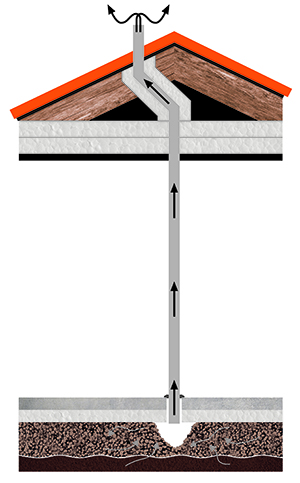
If the house is insulated with Leca® LWA, thanks to the many air holes inside and between the small porous grains, it will be possible to create a negative pressure under the floor, which traps the air containing radon, so that it does not penetrate the house.
Effective passive radon suction is established by installing a pipe connection (ø75 or ø110), which is led from the capillary break layer upward through the building, where it terminates with a ventilation gutter above the roof.
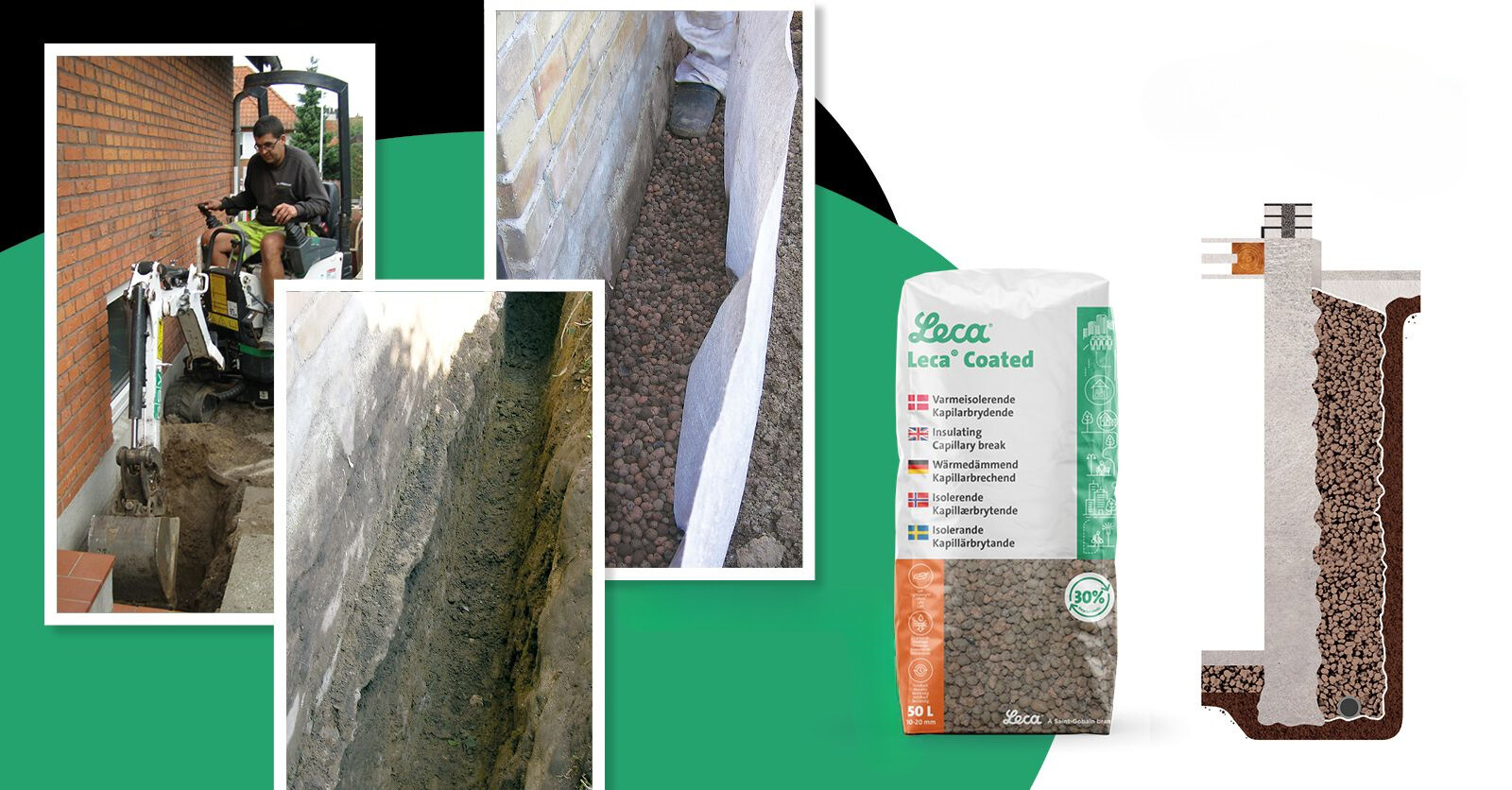
Advantages of using Leca® 10-20 Coated as external drains:
- It is an effective drainage material
- It ensures fast and efficient external drying of the basement wall
- It is malleable and does not need to be cut to size
- It is compressive resistant against sustained earth pressure (10% compressed)
- It's isolating
- According to experience, it is a material that rats and mice avoid
- It is a material that does not change over time
- It is easy to work with, buildable
- It can provide side support on drainage pipes according to DS 430
A green roof can improve the green area available, the habitat and biodiversity, the building physics and the water management.
There are two types of green roofs, extensive and intensive, differentiated mainly by the cost, depth of growing medium and the choice of plants.
Green roofs with Leca® LWA can help retaining, storing and even cleaning the water.
Which are the advantages of having a green roof?
- Reduction of the “urban heat island” effect
- Reduction of rainwater runoff flow
- Improves the quality of water sent to drainage systems
- Improves air quality in cities
- Increases the building's thermal insulation level
- Improves acoustic comfort
Case study: https://www.leca.se/referenser/taktradgard-emporia-malmo
Leca® LWA plays a very important role in floriculture. When cultivating and caring for plants and flowers, it contributes to their healthy growth, ensuring the necessary oxygenation and protecting them from parasites and other harmful elements. Furthermore, it allows saving and managing the water supply for rational and balanced development.
Case study: https://www.leca.se/referenser/taktradgard-bjorvika-oslo
The service life target of building's structure is at aprox 25–50 years. The service life target also affects the design. When defining the structure of the upper base, the materials are selected, and the structural solutions and details of the roof are planned.
The thermal comfort of a house can be substantially improved if the roof, namely the mat slab or the attic, is thermally insulated. If the attic is accessible and in common use, insulation can be done using one of the floor filling techniques. If the attic is unused, it can be insulated with Leca® LWA bags.
After the building lifetime, Leca® LWA can be reused or recycled.
Case study: https://www.leca.fi/referenssit/varmatoiminen-kevytsorakatto-kruunuvuorenrannassa
Choosing the most appropriate solution must be subject to a careful reflection and proportional to the functional weight of walls - particularly exterior walls - in the overall construction performance.
Leca® blocks have various types and different geometries depending on their application and the type of solution they are part of, have the following advantages:
- Lighter and therefore easier to install, leading to greater team productivity.
- Despite being light, Leca® Blocks are resistant and some of them even allow the construction of structural or resistant masonry.
- Leca® LWA, which is part of their composition, gives them a higher level of thermal insulation than normal concrete blocks or traditional ceramic bricks, the degree of thermal insulation depends on the type of block.
- The geometry of some of the Leca® Blocks allows them to obtain high acoustic insulation, allowing the construction of simple walls with a sound absorption coefficient (Rw) higher than other solutions.
Case study: https://www.leca.fi/referenssit/kustannustehokas-ratkaisu-asuntorakentamiseen
Lightweight, resistant, insulating and easy to install floor solutions if often required when rehabilitation of buildings.
Among them, we highlight dry solutions: they will turn your rehabilitation more sustainable since it is composed of a 100% natural product, which do not require the use of water and cement.
Using Leca® LWA the rehabilitation process more efficient and quicker since it is lightweight and easy to handle, is thermally insulating, is protective to duct, pipe and damp proof membranes, can be installed in the bag directly in to the foundation saving time and money and lay it in minutes in a simple, one-man operation.
Case study: https://www.leca.fi/referenssit/1950-luvun-kerrostalon-valipohjataytot-lecar-soralla
Usually, the ground floor is by definitiin a ventilated cavity which must not be closed off. If this is done with insulation materials or by covering the associated ventilation grates in the facade foundation, the probability that the relative humidity under the wooden floors will increase is very high, and this can provide good growth conditions for mold and fungal attack.
If you choose to do the insulation of ground floors of buildings with Leca® LWA the result will be markedly noticeable on both heat consumption and comfort in the home due to the material's properties, in special the thermal resistance and the drainage. Additional to that, the process will be quick and easier in comparison with traditional solutions.
Case study: https://www.leca.co.uk/case-studies/LIVERPOOL-UNDERFLOOR-RENOVATION
Pre-mixed Leca® lightweight concrete for filling and levelling interior and exterior floors, applied in a single layer, suitable for new construction and renovation.
Ideal due to its properties:
- Lightness: ideal lightweight solution for construction and renovation.
- Speed and simplicity: faster and simpler application.
- Smooth finish: smooth finish for direct application to ceramic tiles or floating floors.
In addition to pre-mixed solutions such as Leca® Uno and Leca® Mix, specific formulation of lightweight concrete is also possible with Leca® LWA.
More information here: https://www.leca.pt/solucoes/edificios/pavimentos/enchimentos-de-pisos
LECA has a set of light, resistant and insulating solutions for filling floors. Among them, we highlight dry solutions: they will turn your rehabilitation more sustainable since it is composed of a 100% natural product, which do not require the use of water and cement.
Using Leca® LWA the process is more efficient and quicker since it is lightweight and easy to handle, is thermally insulating, is protective to duct, pipe and damp-proof membranes, can be installed in the bag directly into the foundation saving time and money and lay it in minutes in a simple, one-man operation.
Case study: https://www.leca.pt/obras-de-referencia/solucoes-secas-na-reabilitacao-urbana-sustentavel
To meet the requirements between the functional weight of the building elements - walls, floors, etc - with their performance it is necessary to look for all the elements characteristics in detail.
The most relevant requirements to consider in referred to analysis are: mechanical stability; fire safety; rain tightness; thermo-hygrometric comfort; acoustic comfort; durability; adaptation to use; ease of execution; and economy.
Prefab elements or blocks system produced with Leca® LWA meets all these requirements. These products do not contain any harmful substances and do not release any type of gas, either under normal conditions or in the event of fire. They are made of natural and imperishable materials: Leca® LWA, cement, sand, and water. The lightness of the Leca® elements/blocks makes it fast & easy to install.
Radon is a naturally occurring radioactive gas that enters homes from underground. A high concentration in indoor air increases the risk of lung cancer and radon is therefore a health risk that can and should be eliminated.
If the house is insulated with Leca® LWA, thanks to the many air holes inside and between the small porous grains, it will be possible to create a negative pressure under the floor, which traps the air containing radon, so that it does not penetrate the house.
Effective passive radon suction is established by installing a pipe connection (ø75 or ø110), which is led from the capillary break layer upward through the building, where it terminates with a ventilation gutter above the roof.
Advantages of using Leca® 10-20 Coated as external drains:
- It is an effective drainage material
- It ensures fast and efficient external drying of the basement wall
- It is malleable and does not need to be cut to size
- It is compressive resistant against sustained earth pressure (10% compressed)
- It's isolating
- According to experience, it is a material that rats and mice avoid
- It is a material that does not change over time
- It is easy to work with, buildable
- It can provide side support on drainage pipes according to DS 430